.png)
Asia Bespoke Journey - 16 April 2026:
I was born in Hanoi, but like many people who grow up in a place, I didn’t always see it. It was simply home. The constant hum of motorbikes, the scent of morning soup drifting through narrow lanes, the soft routine of older women sweeping the sidewalks before sunrise - none of it felt remarkable at the time. It wasn’t until I left, explored other places, and came back in my 30s that I finally understood what makes this city so layered, so emotional, and so alive.
When people talk about Hanoi travel, they often start with the obvious: the Old Quarter, Hoan Kiem Lake, street food walks, and quick-hit lists of things to do in Hanoi that you can check off in a day or two. But Hanoi doesn’t unfold on schedule. It isn’t a city that performs on demand. It asks you to slow down, to observe, to listen. Here, history doesn’t sit behind glass - it lingers in weathered walls, in family recipes, in everyday conversations, and in the quiet resilience that shapes the city’s identity.
If you truly want to visit Hanoi, you’ll want to move beyond the surface. Look past the loud promises of travel agencies and the perfectly packaged itineraries, and step into the city’s daily rhythm instead. That’s where the real Hanoi lives. Culture isn’t staged. Food isn’t simplified. History isn’t reduced to a paragraph on a brochure.
This is the Hanoi I want to share with you - through the most meaningful Hanoi places to visit, the unhurried spirit of Hanoi slow travel, and, for those who prefer comfort and depth, experiences designed as a Hanoi luxury tour or a Hanoi private tour - even curated Hanoi luxury vacation packages that still leave room for the city to surprise you.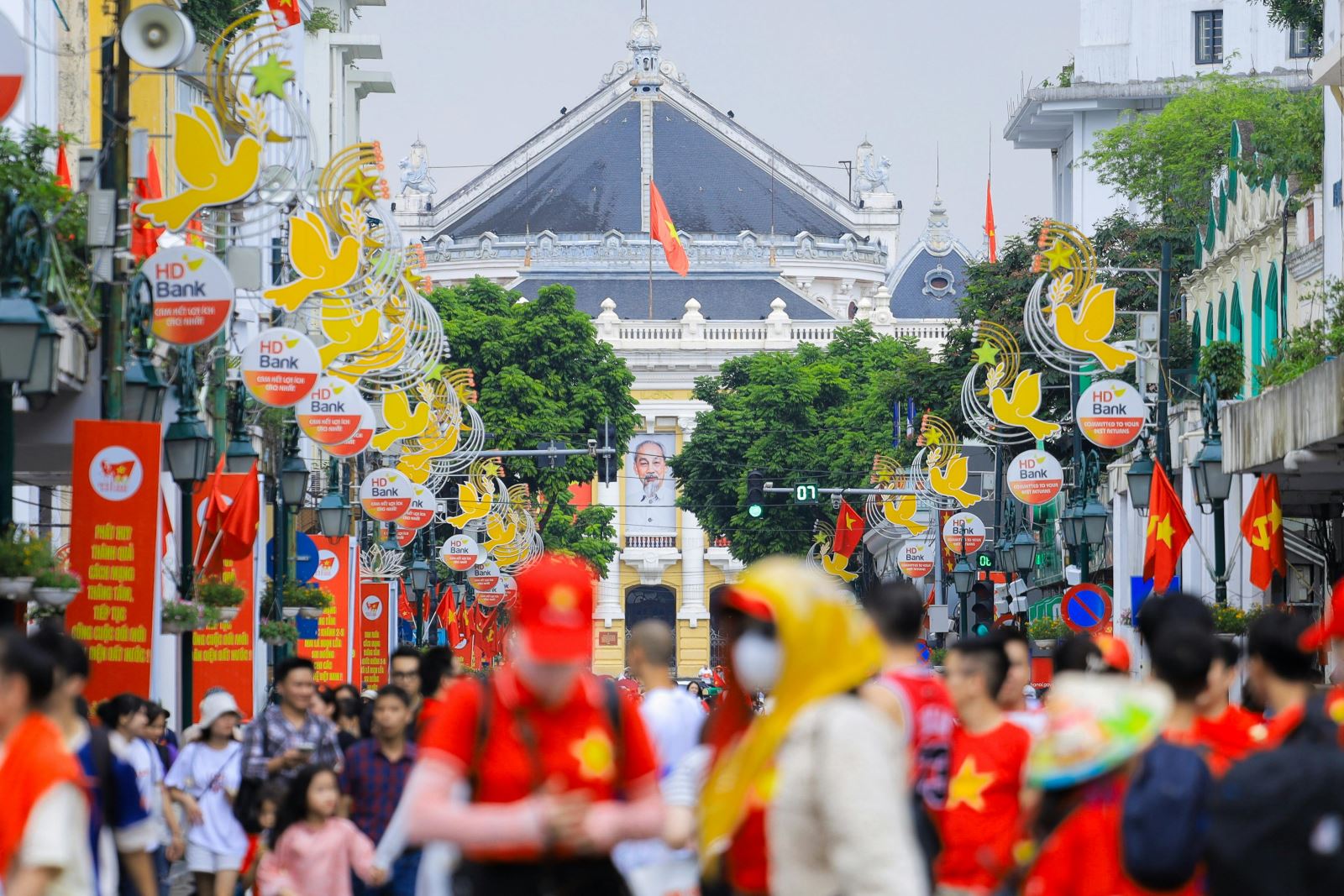
Photo by Hồng Quang Official from Pexels: https://www.pexels.com/photo/bustling-street-scene-in-hanoi-vietnam-33740959/
To understand Hanoi, you must first understand how it breathes. The city wakes early. Before the sun rises fully, the sidewalks begin to fill with life. Elderly men practice tai chi by the lake, women carry baskets of vegetables balanced perfectly on their shoulders, and small plastic stools appear as street vendors set up for the morning rush.
One of the most meaningful things to do in Hanoi is simply to walk. Not with a destination in mind, but with curiosity. Walk through the Old Quarter in the early morning, before it becomes crowded. Notice how each street still reflects its traditional trade, Hang Bac for silver, Hang Gai for silk, Hang Ma for ceremonial paper goods. These are not just names, they are fragments of a history that shaped the city’s identity.
Spend time around Hoan Kiem Lake, but not only during the day. Return in the evening, when families gather, children play, and young couples sit quietly watching the water. On weekends, the surrounding streets close to traffic, transforming the area into a communal space filled with music, games, and laughter. This is one of the most accessible yet deeply authentic Hanoi places to visit, because it shows you how the city belongs to its people.
Another experience I always recommend is sitting at a local café, not a trendy one designed for visitors, but a simple, slightly worn space tucked into a quiet street. Order a cup of egg coffee or black Vietnamese coffee and just sit. Watch how people move, how conversations unfold, how time stretches in a way that feels different from faster cities. This is the essence of Hanoi slow travel. It is not about doing less, but about experiencing more deeply.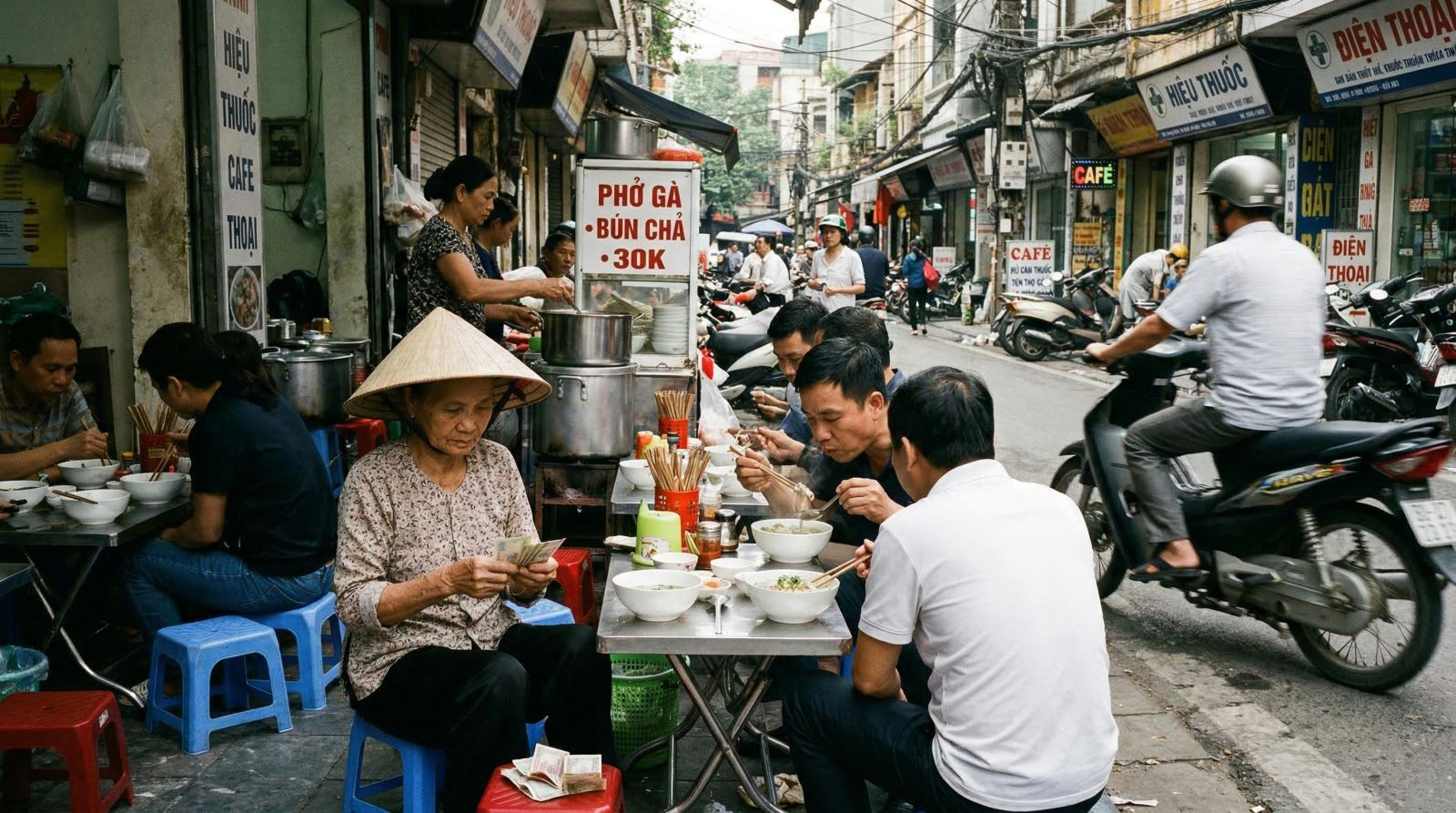
Photo by Pixs Storage: https://www.pexels.com/photo/bustling-street-food-scene-in-hanoi-vietnam-36656017/
Food in Hanoi isn’t just something you try. It’s something you inherit. Recipes are handed down quietly, adjusted in small ways over time, yet always anchored in memory. If you want to understand the city, start with what it feeds its people.
Begin with pho, but not just anywhere. Go early, when the broth is at its most fragrant and the day still feels soft around the edges. Sit on a low stool, shoulder to shoulder with locals who’ve been coming to the same spot for years. This isn’t simply one of the essential things to do in Hanoi. It’s a ritual. The balance of flavors, the comfort of the heat, the unspoken rhythm of eating together in a shared space, it mirrors the way Hanoi connects people through food.
Then make time for bún chả, grilled pork served with noodles and dipping sauce. It carries the smoky bite of charcoal and the gentle sweetness of caramelized meat, something unmistakably northern, both simple and deeply satisfying. You’ll see it everywhere, but the best versions are usually tucked inside small, unassuming places where the recipe hasn’t changed in decades.
Street food is where Hanoi truly opens up. Walk through the Old Quarter at night and let your senses guide you, the scent of grilled meat, fried dough, fresh herbs, hot broth. Try bánh cuốn, delicate rice rolls filled with minced pork and mushrooms, or chả cá, turmeric-marinated fish cooked right at the table. Each dish tells a story, not only of ingredients, but of resilience, adaptation, and a city that keeps its identity intact even as it changes.
What makes Hanoi’s food culture even more compelling is its range. In one day, you can move from the simplest street-side bite to some of the most refined dining experiences in Vietnam, and it still feels connected, like different chapters of the same book.
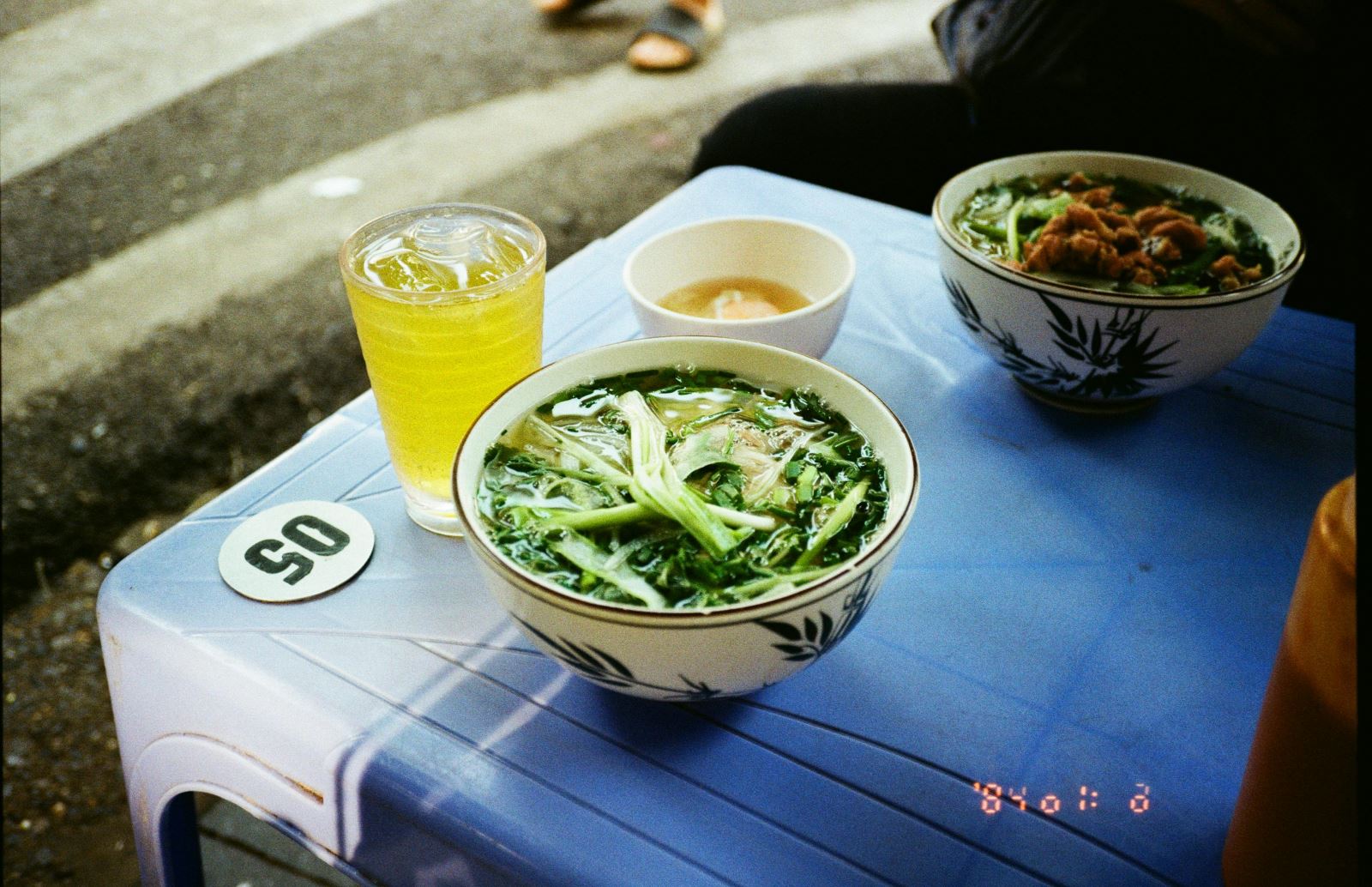
Photo by Trammese: https://www.pexels.com/photo/street-food-scene-in-hanoi-vietnam-with-pho-34312520/
At one end of the spectrum are the humble traditions that are easy to miss if you’re rushing. Elderly vendors still wander neighborhoods balancing woven baskets across their shoulders, calling out softly as they sell sticky rice, sweet soups, or seasonal snacks. These moments pass quickly, but if you’re paying attention, they become some of the most genuine things to do in Hanoi. Sitting on tiny plastic stools, sharing the sidewalk with locals, eating something made right in front of you, this is Hanoi at its most alive, informal, unpolished, and completely honest.
In the middle are the family-run eateries that have quietly protected their recipes for three, sometimes four generations. They don’t advertise. You find them through word of mouth, by noticing where locals gather, or simply by following a line outside a plain storefront. Inside, you’ll often see the same family working together, repeating movements they’ve practiced for decades. The flavors carry memory. They carry history. And eating there feels like stepping into something that’s been carefully preserved.
And then there’s Hanoi’s modern culinary scene, creative, confident, and increasingly recognized on the global stage. Michelin-recognized restaurants and high-end dining spaces are reimagining Vietnamese cuisine in ways that feel bold yet respectful. Traditional ingredients meet contemporary techniques, and the result can be both familiar and surprising. Some places offer tasting menus that unfold like a narrative, with each course reflecting a region, a season, or a cultural influence. Experiences like this expand what a Hanoi luxury tour can be, not by replacing tradition, but by elevating it into something artistic and immersive.
One of the best ways to connect all these layers is through cooking classes led by chefs who genuinely love Vietnam’s thousand-year culinary history. Done well, these aren’t just step-by-step lessons. They’re storytelling. You begin in local markets, learning how to choose ingredients, recognize freshness, and understand balance. Then, in a calm kitchen, you learn not only how to cook the dishes, but why they’re made that way. Technique, flavor, and cultural context come together in a way that makes the cuisine feel alive.
This is what defines Hanoi’s food culture. It isn’t one style or one level or one interpretation. It moves easily between street corners and fine dining rooms, between tradition and innovation, between everyday life and carefully curated experiences. And when you approach it with curiosity and patience, it becomes one of the most powerful ways to understand the city, an essential part of any meaningful Hanoi travel experience.
Photo by Quang Nguyen Vinh: https://www.pexels.com/photo/elderly-vietnamese-women-creating-bamboo-traditional-fish-traps-in-yard-6713118/
Beyond the city center, there is another side of Hanoi that many visitors never experience. It lives in the surrounding craft villages, where traditional skills are still practiced with patience and precision. These places are not just stops on a route. They are living archives of Vietnamese culture, where craftsmanship is passed down quietly through generations and where time seems to move at a gentler pace.
Bát Tràng, the ceramic village, is one of the best known, yet it can still feel deeply personal if you step beyond the main market area. Here, you can enter small family workshops and try shaping clay on a pottery wheel with guidance from local artisans. The process is humbling. What looks effortless in the hands of a master quickly becomes a lesson in patience and control when you try it yourself. You can also wander narrow alleyways and observe the full production journey, from molding and carving to glazing and firing in traditional kilns. Many visitors choose to paint their own ceramic pieces, which are later fired and kept as a personal reminder of the day. It is one of the most interactive things to do in Hanoi, especially if you want to connect with the making process rather than simply watch from the side.
In Vạn Phúc silk village, the experience feels more tactile and refined. As you walk through the lanes, the steady rhythm of wooden looms fills the air, creating a quiet sense of continuity. You can visit weaving houses where artisans demonstrate each stage of silk production, from spinning threads to weaving intricate patterns. Some workshops invite visitors to try simple weaving techniques, offering a brief but meaningful glimpse into the precision required for each piece of fabric. You can also explore local showrooms displaying high-quality silk and learn how to recognize authentic handwoven silk versus mass-produced alternatives. For anyone drawn to fashion and textiles, this is one of the most enriching Hanoi places to visit, where craftsmanship and cultural identity come together.
Photo by Quang Nguyen Vinh: https://www.pexels.com/photo/light-nature-red-woman-6346788/
Quảng Phú Cầu incense village offers a completely different sensory experience. The first thing you notice is the color, hundreds of bundles of bright red incense sticks laid out in the sun, forming patterns that feel almost unreal. Beyond the visuals, there is a process you can step into. Visitors can watch artisans dye bamboo sticks, roll incense paste by hand, and arrange the bundles carefully for drying. Some families may invite you to try bundling or arranging the incense yourself, a simple activity that reveals the repetitive precision behind what looks like an easy task. It’s also a chance to learn the spiritual role of incense in Vietnamese life, from rituals and ancestral worship to everyday offerings. That understanding adds depth, turning a beautiful stop into something more meaningful.
For a more immersive rural day, villages like Đường Lâm, often associated with traditional architecture and agricultural life, let you go beyond craft and into lifestyle. Here, you can cycle along quiet village roads, visit ancient houses built from laterite stone, and join local families in preparing simple meals using ingredients grown nearby. Some hosts offer hands-on activities such as making traditional rice cakes or learning basic farming techniques, depending on the season. These experiences soften the line between visitor and participant, which makes them especially rewarding for anyone drawn to Hanoi slow travel, where connection matters more than speed.
What makes these villages memorable is not only what you see, but what you do. You are not standing behind a barrier watching a demonstration. You are touching, shaping, weaving, arranging, and learning. This is also where a well-planned Hanoi private tour can elevate the day even further, by connecting you with the right artisans at the right time, in a way that feels natural rather than staged.
In a rapidly modernizing country, these villages represent continuity. They remind us that even as Vietnam evolves, there are still places where tradition is not only preserved, but lived every day. And when you step into that rhythm, even briefly, you begin to understand a deeper layer of Hanoi, one you won’t find in any standard list of things to do in Hanoi.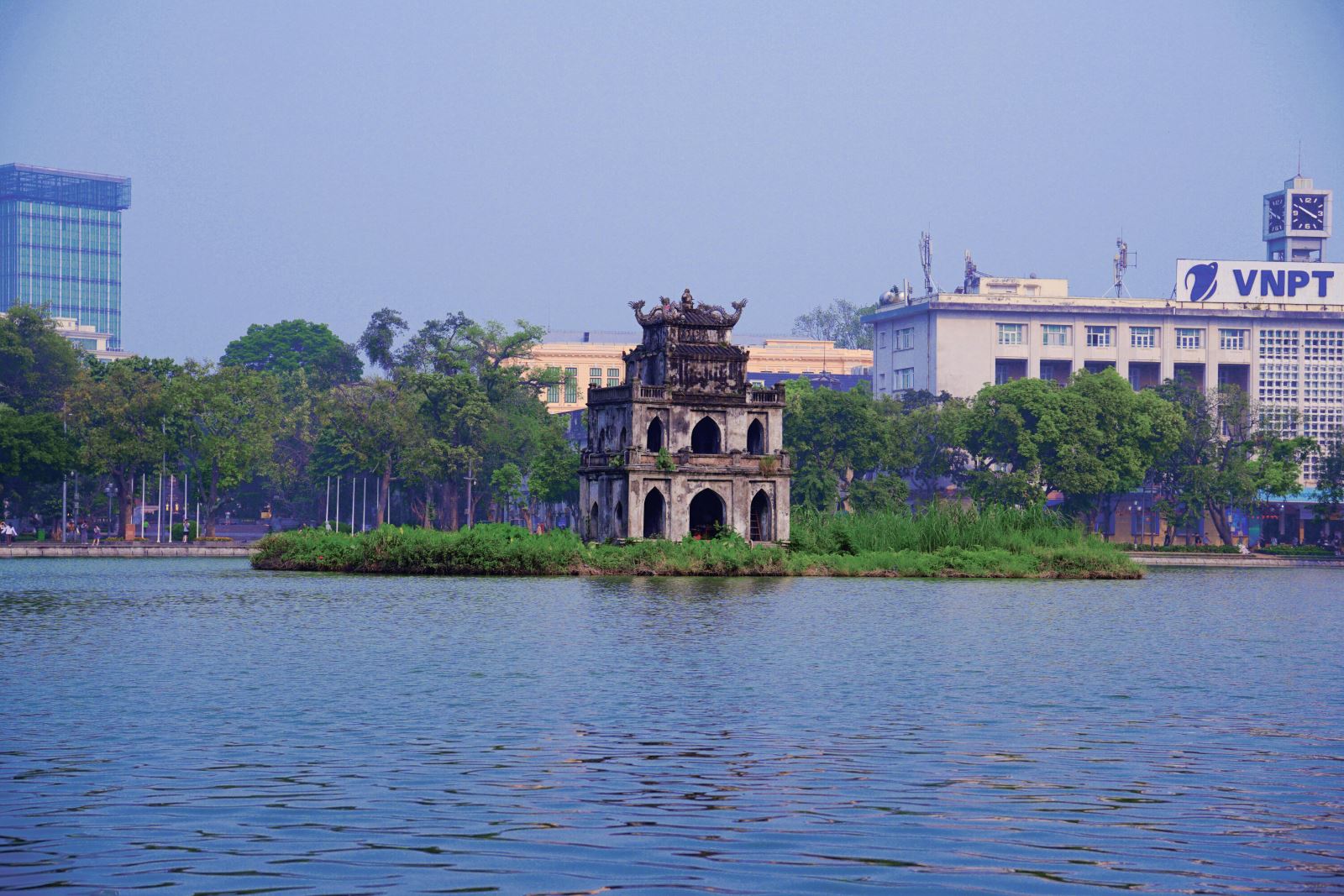
Photo by Hữu Quyết: https://www.pexels.com/photo/hoan-kiem-lake-with-turtle-tower-hanoi-37059838/
Hanoi is a city shaped by history, and not always the easy kind. It has endured colonization, war, and rapid transformation, yet it keeps moving forward with a quiet strength that defines its character.
To understand that strength, you need to spend time in places that carry the weight of the past. Hỏa Lò Prison, often referred to as the “Hanoi Hilton,” offers a stark look into both French colonial rule and the Vietnam War. It is not a comfortable stop, but it is an important one.
The Vietnam Military History Museum adds another layer, with artifacts and personal stories that reveal the complexity behind the country’s struggles and survival. As you move through the exhibits, you begin to sense the resilience that has shaped modern Vietnam.
Equally essential, yet often overlooked, is the Thăng Long Imperial Citadel, a UNESCO World Heritage Site that sits quietly at the heart of the city. Unlike grand palaces elsewhere in Asia, it doesn’t overwhelm you with spectacle. It reveals itself slowly through archaeological remains, ancient gates, and open courtyards. This was once the political center of Vietnam for more than a thousand years, a place where dynasties rose and fell and decisions that shaped the country were made. Walking here feels like crossing multiple eras at once, from imperial foundations to wartime command bunkers used during the Vietnam War. It remains one of the most meaningful Hanoi places to visit if you want to understand how deeply history is embedded in the city.
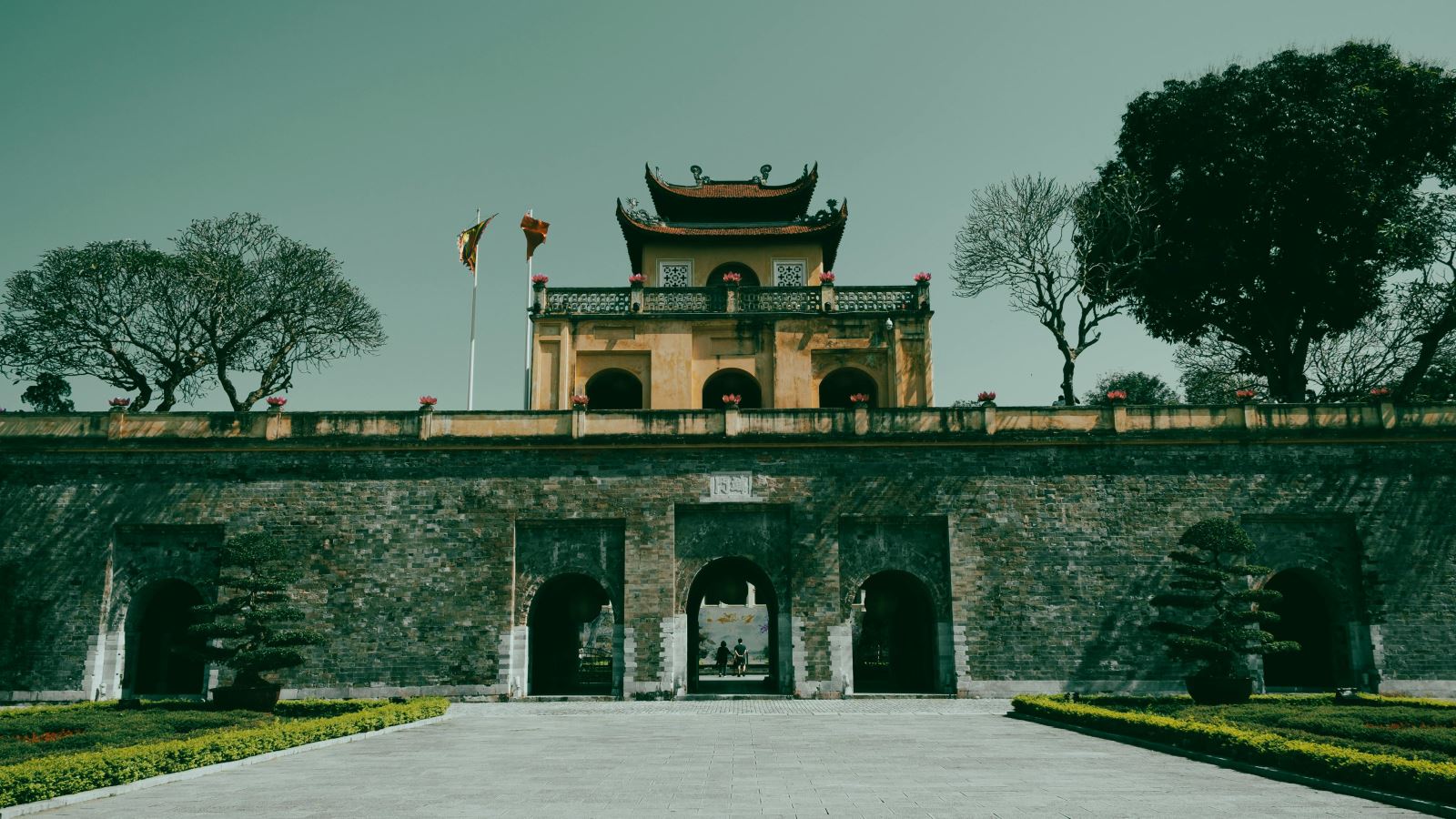
Photo by Thuong D: https://www.pexels.com/photo/imperial-citadel-in-hanoi-vietnam-13196588/
Temples and pagodas offer another lens, quieter and more spiritual. The Temple of Literature, dedicated to Confucius and Vietnam’s first national university, reflects a long-standing reverence for education, discipline, and intellectual life. As you walk through tree-shaded courtyards lined with stone stelae, the history you feel is not built through conflict, but through knowledge and tradition.
Ngọc Sơn Temple, resting on Hoàn Kiếm Lake, brings a different kind of closeness. Connected by the iconic red Húc Bridge, it sits at the meeting point of legend and everyday life. Locals still come to pray, reflect, and pause. It’s both a cultural landmark and a living spiritual space, reminding you that history in Hanoi is not frozen. It continues to be practiced.
Then there are pagodas like Trấn Quốc, the oldest pagoda in the city, standing gracefully beside West Lake. Near sunset, when the light softens and the crowds thin, the atmosphere becomes almost meditative. Incense drifts through the air, monks move quietly through the grounds, and the city’s noise fades into the background. Visiting places like this isn’t only about architecture. It’s about presence, and about seeing how spirituality has remained a steady thread through centuries of change.
Still, history in Hanoi isn’t confined to museums and monuments. It lives in architecture, in the narrow tube houses of the Old Quarter, in French colonial façades, and in the way the city continues to evolve while holding onto its past. It lives in the conversations of older generations who have witnessed enormous change, and in the quiet determination of a younger generation building something new.
That’s why Hanoi travel can’t be reduced to a checklist. It isn’t only about seeing places. It’s about understanding how those places came to be, and how they continue to shape the city’s identity today.
This is where a thoughtfully designed Hanoi private tour becomes not just convenient, but genuinely transformative.
A private tour, when done well, doesn’t simply move you from place to place. It changes how you see. It connects what you’re looking at with why it matters. A quiet temple becomes more than architecture once you understand its role in daily spiritual life. A bowl of noodles becomes more than a tasty meal when you learn how the recipe has been protected across generations. A craft village becomes more than a photo stop when you sit with an artisan and hear the story behind their work.
What makes Asia Bespoke Journeys stand out is their approach to Hanoi. They don’t treat it as a destination to be consumed, but as a place to be understood. As local experts, Asia Bespoke Journeys designs each journey around the way you want to experience the city. Whether you’re drawn to culinary exploration, cultural depth, or a slower, more reflective pace, the itinerary is shaped to match that intention.
With Asia Bespoke Journeys, a Hanoi luxury tour isn’t about packing in more stops or more activities. It’s about creating space for the right moments. The team knows when to bring you into the energy of a busy market, and when to guide you into a quiet alley where something more personal can unfold. They know which artisans are open to sharing their craft, which cafés carry stories beneath their simplicity, and which times of day allow Hanoi to show its most authentic self.
They also handle the details that quietly define a smooth experience. Timing, logistics, language, and access are managed seamlessly, so you can stay fully present. That matters in a city like Hanoi, where the pace and complexity can feel overwhelming at first.
For many travelers, especially those considering Hanoi luxury vacation packages, the question is whether a private tour is necessary. From my perspective, it’s not about necessity. It’s about depth. If you want to move beyond the surface and genuinely connect with the culture, the people, and the rhythm of the city, the right guidance changes everything.
In the end, Hanoi isn’t a place you simply pass through. It’s a place you experience, layer by layer. And with the right support from Asia Bespoke Journeys, that experience becomes more meaningful, more personal, and far more lasting.
If you choose to visit Hanoi, don’t rush. Let yourself get a little lost in its streets. Sit in its cafés without an agenda. Taste the food with curiosity instead of expectations. Move beyond the obvious things to do in Hanoi, and you’ll discover a city that is far richer, more complex, and more human than you first imagined.
Whether you’re drawn to culture, culinary exploration, or a deeper understanding of history, Hanoi offers something that’s difficult to replicate elsewhere. With thoughtfully designed Hanoi luxury vacation packages or a carefully curated Hanoi luxury tour, you can access deeper layers of the city while still keeping comfort and ease. But even without a structured plan, Hanoi has a way of guiding you, if you’re willing to slow down and listen.
For me, returning to Hanoi in my 30s wasn’t just a trip through a city. It was a journey back to a part of myself I hadn’t fully understood before. And that may be what makes Hanoi so powerful. It doesn’t only show you where you are. It gently reminds you where you come from.
I was born in Hanoi, but like many people who grow up in a place, I didn’t always see it. It was simply home. The constant hum of motorbikes, the scent of morning soup drifting through narrow lanes, the soft routine of older women sweeping the sidewalks before sunrise - none of it felt remarkable at the time. It wasn’t until I left, explored other places, and came back in my 30s that I finally understood what makes this city so layered, so emotional, and so alive.
When people talk about Hanoi travel, they often start with the obvious: the Old Quarter, Hoan Kiem Lake, street food walks, and quick-hit lists of things to do in Hanoi that you can check off in a day or two. But Hanoi doesn’t unfold on schedule. It isn’t a city that performs on demand. It asks you to slow down, to observe, to listen. Here, history doesn’t sit behind glass - it lingers in weathered walls, in family recipes, in everyday conversations, and in the quiet resilience that shapes the city’s identity.
If you truly want to visit Hanoi, you’ll want to move beyond the surface. Look past the loud promises of travel agencies and the perfectly packaged itineraries, and step into the city’s daily rhythm instead. That’s where the real Hanoi lives. Culture isn’t staged. Food isn’t simplified. History isn’t reduced to a paragraph on a brochure.
This is the Hanoi I want to share with you - through the most meaningful Hanoi places to visit, the unhurried spirit of Hanoi slow travel, and, for those who prefer comfort and depth, experiences designed as a Hanoi luxury tour or a Hanoi private tour - even curated Hanoi luxury vacation packages that still leave room for the city to surprise you.
Living Hanoi – Everyday Culture and the Rhythm of the City
Photo by Hồng Quang Official from Pexels: https://www.pexels.com/photo/bustling-street-scene-in-hanoi-vietnam-33740959/
To understand Hanoi, you must first understand how it breathes. The city wakes early. Before the sun rises fully, the sidewalks begin to fill with life. Elderly men practice tai chi by the lake, women carry baskets of vegetables balanced perfectly on their shoulders, and small plastic stools appear as street vendors set up for the morning rush.
One of the most meaningful things to do in Hanoi is simply to walk. Not with a destination in mind, but with curiosity. Walk through the Old Quarter in the early morning, before it becomes crowded. Notice how each street still reflects its traditional trade, Hang Bac for silver, Hang Gai for silk, Hang Ma for ceremonial paper goods. These are not just names, they are fragments of a history that shaped the city’s identity.
Spend time around Hoan Kiem Lake, but not only during the day. Return in the evening, when families gather, children play, and young couples sit quietly watching the water. On weekends, the surrounding streets close to traffic, transforming the area into a communal space filled with music, games, and laughter. This is one of the most accessible yet deeply authentic Hanoi places to visit, because it shows you how the city belongs to its people.
Another experience I always recommend is sitting at a local café, not a trendy one designed for visitors, but a simple, slightly worn space tucked into a quiet street. Order a cup of egg coffee or black Vietnamese coffee and just sit. Watch how people move, how conversations unfold, how time stretches in a way that feels different from faster cities. This is the essence of Hanoi slow travel. It is not about doing less, but about experiencing more deeply.
A Culinary Journey – Food as Memory, Identity, and Connection
Photo by Pixs Storage: https://www.pexels.com/photo/bustling-street-food-scene-in-hanoi-vietnam-36656017/
Food in Hanoi isn’t just something you try. It’s something you inherit. Recipes are handed down quietly, adjusted in small ways over time, yet always anchored in memory. If you want to understand the city, start with what it feeds its people.
Begin with pho, but not just anywhere. Go early, when the broth is at its most fragrant and the day still feels soft around the edges. Sit on a low stool, shoulder to shoulder with locals who’ve been coming to the same spot for years. This isn’t simply one of the essential things to do in Hanoi. It’s a ritual. The balance of flavors, the comfort of the heat, the unspoken rhythm of eating together in a shared space, it mirrors the way Hanoi connects people through food.
Then make time for bún chả, grilled pork served with noodles and dipping sauce. It carries the smoky bite of charcoal and the gentle sweetness of caramelized meat, something unmistakably northern, both simple and deeply satisfying. You’ll see it everywhere, but the best versions are usually tucked inside small, unassuming places where the recipe hasn’t changed in decades.
Street food is where Hanoi truly opens up. Walk through the Old Quarter at night and let your senses guide you, the scent of grilled meat, fried dough, fresh herbs, hot broth. Try bánh cuốn, delicate rice rolls filled with minced pork and mushrooms, or chả cá, turmeric-marinated fish cooked right at the table. Each dish tells a story, not only of ingredients, but of resilience, adaptation, and a city that keeps its identity intact even as it changes.
What makes Hanoi’s food culture even more compelling is its range. In one day, you can move from the simplest street-side bite to some of the most refined dining experiences in Vietnam, and it still feels connected, like different chapters of the same book.
Photo by Trammese: https://www.pexels.com/photo/street-food-scene-in-hanoi-vietnam-with-pho-34312520/
At one end of the spectrum are the humble traditions that are easy to miss if you’re rushing. Elderly vendors still wander neighborhoods balancing woven baskets across their shoulders, calling out softly as they sell sticky rice, sweet soups, or seasonal snacks. These moments pass quickly, but if you’re paying attention, they become some of the most genuine things to do in Hanoi. Sitting on tiny plastic stools, sharing the sidewalk with locals, eating something made right in front of you, this is Hanoi at its most alive, informal, unpolished, and completely honest.
In the middle are the family-run eateries that have quietly protected their recipes for three, sometimes four generations. They don’t advertise. You find them through word of mouth, by noticing where locals gather, or simply by following a line outside a plain storefront. Inside, you’ll often see the same family working together, repeating movements they’ve practiced for decades. The flavors carry memory. They carry history. And eating there feels like stepping into something that’s been carefully preserved.
And then there’s Hanoi’s modern culinary scene, creative, confident, and increasingly recognized on the global stage. Michelin-recognized restaurants and high-end dining spaces are reimagining Vietnamese cuisine in ways that feel bold yet respectful. Traditional ingredients meet contemporary techniques, and the result can be both familiar and surprising. Some places offer tasting menus that unfold like a narrative, with each course reflecting a region, a season, or a cultural influence. Experiences like this expand what a Hanoi luxury tour can be, not by replacing tradition, but by elevating it into something artistic and immersive.
One of the best ways to connect all these layers is through cooking classes led by chefs who genuinely love Vietnam’s thousand-year culinary history. Done well, these aren’t just step-by-step lessons. They’re storytelling. You begin in local markets, learning how to choose ingredients, recognize freshness, and understand balance. Then, in a calm kitchen, you learn not only how to cook the dishes, but why they’re made that way. Technique, flavor, and cultural context come together in a way that makes the cuisine feel alive.
This is what defines Hanoi’s food culture. It isn’t one style or one level or one interpretation. It moves easily between street corners and fine dining rooms, between tradition and innovation, between everyday life and carefully curated experiences. And when you approach it with curiosity and patience, it becomes one of the most powerful ways to understand the city, an essential part of any meaningful Hanoi travel experience.
Craft Villages – Preserving Tradition in a Changing World
Photo by Quang Nguyen Vinh: https://www.pexels.com/photo/elderly-vietnamese-women-creating-bamboo-traditional-fish-traps-in-yard-6713118/
Beyond the city center, there is another side of Hanoi that many visitors never experience. It lives in the surrounding craft villages, where traditional skills are still practiced with patience and precision. These places are not just stops on a route. They are living archives of Vietnamese culture, where craftsmanship is passed down quietly through generations and where time seems to move at a gentler pace.
Bát Tràng, the ceramic village, is one of the best known, yet it can still feel deeply personal if you step beyond the main market area. Here, you can enter small family workshops and try shaping clay on a pottery wheel with guidance from local artisans. The process is humbling. What looks effortless in the hands of a master quickly becomes a lesson in patience and control when you try it yourself. You can also wander narrow alleyways and observe the full production journey, from molding and carving to glazing and firing in traditional kilns. Many visitors choose to paint their own ceramic pieces, which are later fired and kept as a personal reminder of the day. It is one of the most interactive things to do in Hanoi, especially if you want to connect with the making process rather than simply watch from the side.
In Vạn Phúc silk village, the experience feels more tactile and refined. As you walk through the lanes, the steady rhythm of wooden looms fills the air, creating a quiet sense of continuity. You can visit weaving houses where artisans demonstrate each stage of silk production, from spinning threads to weaving intricate patterns. Some workshops invite visitors to try simple weaving techniques, offering a brief but meaningful glimpse into the precision required for each piece of fabric. You can also explore local showrooms displaying high-quality silk and learn how to recognize authentic handwoven silk versus mass-produced alternatives. For anyone drawn to fashion and textiles, this is one of the most enriching Hanoi places to visit, where craftsmanship and cultural identity come together.
Photo by Quang Nguyen Vinh: https://www.pexels.com/photo/light-nature-red-woman-6346788/
Quảng Phú Cầu incense village offers a completely different sensory experience. The first thing you notice is the color, hundreds of bundles of bright red incense sticks laid out in the sun, forming patterns that feel almost unreal. Beyond the visuals, there is a process you can step into. Visitors can watch artisans dye bamboo sticks, roll incense paste by hand, and arrange the bundles carefully for drying. Some families may invite you to try bundling or arranging the incense yourself, a simple activity that reveals the repetitive precision behind what looks like an easy task. It’s also a chance to learn the spiritual role of incense in Vietnamese life, from rituals and ancestral worship to everyday offerings. That understanding adds depth, turning a beautiful stop into something more meaningful.
For a more immersive rural day, villages like Đường Lâm, often associated with traditional architecture and agricultural life, let you go beyond craft and into lifestyle. Here, you can cycle along quiet village roads, visit ancient houses built from laterite stone, and join local families in preparing simple meals using ingredients grown nearby. Some hosts offer hands-on activities such as making traditional rice cakes or learning basic farming techniques, depending on the season. These experiences soften the line between visitor and participant, which makes them especially rewarding for anyone drawn to Hanoi slow travel, where connection matters more than speed.
What makes these villages memorable is not only what you see, but what you do. You are not standing behind a barrier watching a demonstration. You are touching, shaping, weaving, arranging, and learning. This is also where a well-planned Hanoi private tour can elevate the day even further, by connecting you with the right artisans at the right time, in a way that feels natural rather than staged.
In a rapidly modernizing country, these villages represent continuity. They remind us that even as Vietnam evolves, there are still places where tradition is not only preserved, but lived every day. And when you step into that rhythm, even briefly, you begin to understand a deeper layer of Hanoi, one you won’t find in any standard list of things to do in Hanoi.
History and Resilience – Understanding Hanoi’s Past
Photo by Hữu Quyết: https://www.pexels.com/photo/hoan-kiem-lake-with-turtle-tower-hanoi-37059838/
Hanoi is a city shaped by history, and not always the easy kind. It has endured colonization, war, and rapid transformation, yet it keeps moving forward with a quiet strength that defines its character.
To understand that strength, you need to spend time in places that carry the weight of the past. Hỏa Lò Prison, often referred to as the “Hanoi Hilton,” offers a stark look into both French colonial rule and the Vietnam War. It is not a comfortable stop, but it is an important one.
The Vietnam Military History Museum adds another layer, with artifacts and personal stories that reveal the complexity behind the country’s struggles and survival. As you move through the exhibits, you begin to sense the resilience that has shaped modern Vietnam.
Equally essential, yet often overlooked, is the Thăng Long Imperial Citadel, a UNESCO World Heritage Site that sits quietly at the heart of the city. Unlike grand palaces elsewhere in Asia, it doesn’t overwhelm you with spectacle. It reveals itself slowly through archaeological remains, ancient gates, and open courtyards. This was once the political center of Vietnam for more than a thousand years, a place where dynasties rose and fell and decisions that shaped the country were made. Walking here feels like crossing multiple eras at once, from imperial foundations to wartime command bunkers used during the Vietnam War. It remains one of the most meaningful Hanoi places to visit if you want to understand how deeply history is embedded in the city.
Photo by Thuong D: https://www.pexels.com/photo/imperial-citadel-in-hanoi-vietnam-13196588/
Temples and pagodas offer another lens, quieter and more spiritual. The Temple of Literature, dedicated to Confucius and Vietnam’s first national university, reflects a long-standing reverence for education, discipline, and intellectual life. As you walk through tree-shaded courtyards lined with stone stelae, the history you feel is not built through conflict, but through knowledge and tradition.
Ngọc Sơn Temple, resting on Hoàn Kiếm Lake, brings a different kind of closeness. Connected by the iconic red Húc Bridge, it sits at the meeting point of legend and everyday life. Locals still come to pray, reflect, and pause. It’s both a cultural landmark and a living spiritual space, reminding you that history in Hanoi is not frozen. It continues to be practiced.
Then there are pagodas like Trấn Quốc, the oldest pagoda in the city, standing gracefully beside West Lake. Near sunset, when the light softens and the crowds thin, the atmosphere becomes almost meditative. Incense drifts through the air, monks move quietly through the grounds, and the city’s noise fades into the background. Visiting places like this isn’t only about architecture. It’s about presence, and about seeing how spirituality has remained a steady thread through centuries of change.
Still, history in Hanoi isn’t confined to museums and monuments. It lives in architecture, in the narrow tube houses of the Old Quarter, in French colonial façades, and in the way the city continues to evolve while holding onto its past. It lives in the conversations of older generations who have witnessed enormous change, and in the quiet determination of a younger generation building something new.
That’s why Hanoi travel can’t be reduced to a checklist. It isn’t only about seeing places. It’s about understanding how those places came to be, and how they continue to shape the city’s identity today.
Is It Worth Booking a Private Tour in Hanoi?
After spending years both living in and returning to Hanoi, I can say this honestly: the city isn’t hard to navigate, but it can be hard to truly understand. On the surface, it feels simple. You can wander the Old Quarter, sample street food, visit Hanoi’s best-known landmarks, and leave feeling like you’ve “done” it. But Hanoi is layered in ways that aren’t immediately visible. Its meaning lives in context, in stories, in small details that are easy to miss without the right guidance.This is where a thoughtfully designed Hanoi private tour becomes not just convenient, but genuinely transformative.
A private tour, when done well, doesn’t simply move you from place to place. It changes how you see. It connects what you’re looking at with why it matters. A quiet temple becomes more than architecture once you understand its role in daily spiritual life. A bowl of noodles becomes more than a tasty meal when you learn how the recipe has been protected across generations. A craft village becomes more than a photo stop when you sit with an artisan and hear the story behind their work.
What makes Asia Bespoke Journeys stand out is their approach to Hanoi. They don’t treat it as a destination to be consumed, but as a place to be understood. As local experts, Asia Bespoke Journeys designs each journey around the way you want to experience the city. Whether you’re drawn to culinary exploration, cultural depth, or a slower, more reflective pace, the itinerary is shaped to match that intention.
With Asia Bespoke Journeys, a Hanoi luxury tour isn’t about packing in more stops or more activities. It’s about creating space for the right moments. The team knows when to bring you into the energy of a busy market, and when to guide you into a quiet alley where something more personal can unfold. They know which artisans are open to sharing their craft, which cafés carry stories beneath their simplicity, and which times of day allow Hanoi to show its most authentic self.
They also handle the details that quietly define a smooth experience. Timing, logistics, language, and access are managed seamlessly, so you can stay fully present. That matters in a city like Hanoi, where the pace and complexity can feel overwhelming at first.
For many travelers, especially those considering Hanoi luxury vacation packages, the question is whether a private tour is necessary. From my perspective, it’s not about necessity. It’s about depth. If you want to move beyond the surface and genuinely connect with the culture, the people, and the rhythm of the city, the right guidance changes everything.
In the end, Hanoi isn’t a place you simply pass through. It’s a place you experience, layer by layer. And with the right support from Asia Bespoke Journeys, that experience becomes more meaningful, more personal, and far more lasting.
Final Thoughts
Hanoi isn’t a city you can fully understand in a few days. It reveals itself slowly, through small moments, through conversations, and through quiet observations that stay with you long after you leave.If you choose to visit Hanoi, don’t rush. Let yourself get a little lost in its streets. Sit in its cafés without an agenda. Taste the food with curiosity instead of expectations. Move beyond the obvious things to do in Hanoi, and you’ll discover a city that is far richer, more complex, and more human than you first imagined.
Whether you’re drawn to culture, culinary exploration, or a deeper understanding of history, Hanoi offers something that’s difficult to replicate elsewhere. With thoughtfully designed Hanoi luxury vacation packages or a carefully curated Hanoi luxury tour, you can access deeper layers of the city while still keeping comfort and ease. But even without a structured plan, Hanoi has a way of guiding you, if you’re willing to slow down and listen.
For me, returning to Hanoi in my 30s wasn’t just a trip through a city. It was a journey back to a part of myself I hadn’t fully understood before. And that may be what makes Hanoi so powerful. It doesn’t only show you where you are. It gently reminds you where you come from.
Written by Asia Bespoke Journeys’ expert